
Is white sourdough still healthy? Blood sugar, fibre and gut health explained

White sourdough has become a staple for people looking for a more natural alternative to processed white bread. It feels slower, more traditional, and often tastes better too. But when it comes to blood sugar, fibre, gut health and overall nutrition, how healthy is it really?
Is white sourdough better for blood sugar levels?
One of the most common questions people ask is whether sourdough causes smaller blood sugar spikes than regular white bread.
In most cases, yes.
Sourdough fermentation changes how the starch in bread behaves in the body. During the long fermentation process, organic acids form and partially break down carbohydrates. This slows digestion and can reduce how quickly glucose enters the bloodstream.
Compared to standard white bread made with commercial yeast, white sourdough often produces a steadier glycaemic response. That makes it a better option for people who are mindful of energy levels, cravings, or blood sugar balance.
If you’d like to explore this in more detail, visit our blog where we break down the glycaemic index of different breads, comparing white and whole wheat yeasted bread with sourdough. We also look at whether sourdough can be a suitable choice for people managing diabetes and break down the best times to eat sourdough for stable blood sugar and energy.
Is sourdough high in fibre?
White sourdough is not a high-fibre food.
Because it is made with refined white flour, most of the fibre-rich bran and germ have been removed during milling. Fibre is essential for slowing glucose absorption, supporting heart health, feeding beneficial gut bacteria and helping you feel satisfied after meals.
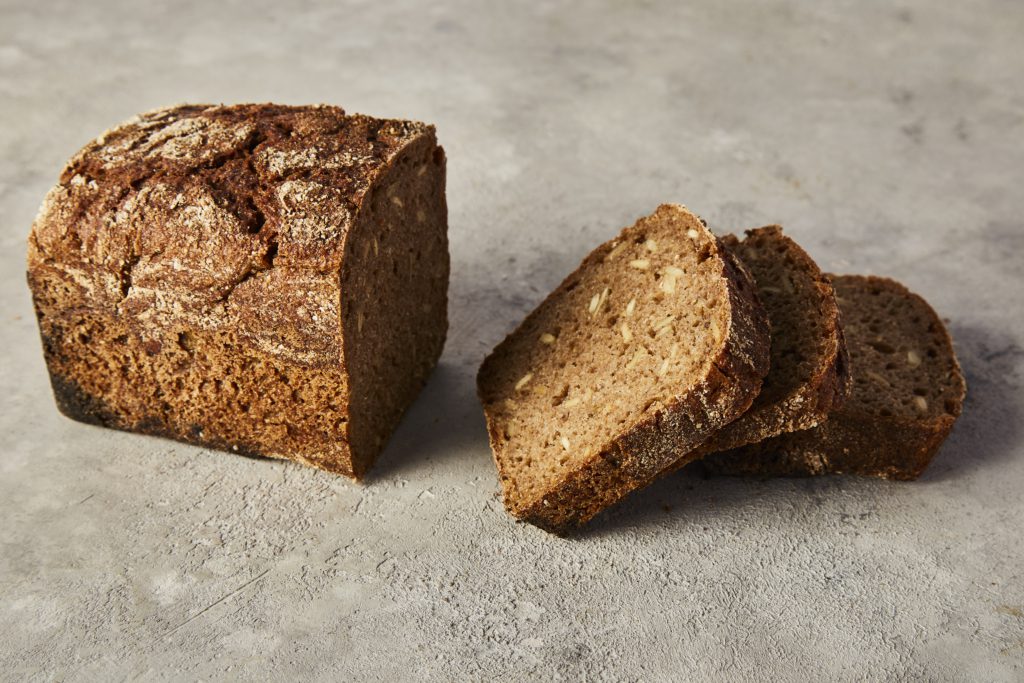
If your priority is increasing fibre intake, whole-grain or rye sourdough are stronger choices. Just be cautious with breads marketed as “high fibre” — that claim doesn’t always mean the bread is made from whole grains (Jump to section: A quick watch-out when choosing bread to find out more).

What about bioavailability?
This is where sourdough has a real advantage.
Grains naturally contain phytic acid, an antinutrient that binds minerals like iron, zinc, magnesium and calcium and makes them harder for your body to absorb. Research shows that the fermentation process used in sourdough can reduce phytic acid levels, which increases the bioavailability of these minerals — meaning your body can access and use them more easily (¹).
One laboratory study found that simply lowering the dough’s pH through sourdough fermentation significantly reduced phytic acid and improved magnesium bioaccessibility (²). Other research has shown that prolonged sourdough fermentation breaks down more phytic acid than traditional yeast fermentation, leading to greater mineral solubility (³).
Animal studies also support this effect: rats fed sourdough bread showed better absorption of minerals such as magnesium, iron and zinc compared with those fed other breads (⁴).
Because whole-grain flours start with more minerals and more phytic acid to break down, whole-grain sourdough in particular delivers both higher fibre and increased mineral bioavailability compared with refined white versions.
A quick “watch-out” when choosing bread
It’s worth noting that labels like “high fibre” or “high protein” don’t automatically make a bread healthy. Some packaged loaves:
Add isolated fibres (e.g. inulin, polydextrose, resistant starch) to boost the fibre number on the label.
- These aren’t inherently harmful, but they don’t provide the same range of nutrients as fibre naturally present in whole grains (which comes packaged with vitamins, minerals, antioxidants and phytonutrients).
- Large amounts of isolated fibres can also cause bloating or digestive discomfort in some people.
Add protein powders (such as wheat protein or soy protein isolate) to increase the protein claim.
- This can make the bread more processed and doesn’t necessarily improve overall nutritional quality.
- It may also shift the product away from a traditional, minimally processed food.
Add emulsifiers, preservatives, added sugars, or refined vegetable oils.
A simple rule of thumb:
Look at the ingredients list. Ideally, it should be short and recognisable — for example: flour (preferably whole grain), water, salt, and sourdough starter (NOT fermented wheat flour). The more additives you see, the more ultra-processed the product likely is.
Is sourdough good for gut health?
Sourdough is often described as easier to digest, and many people find that to be true.
Fermentation partially breaks down certain carbohydrates and proteins before you even eat the bread. This can make it feel lighter and more comfortable to digest compared to fast-risen white bread.
Although the beneficial bacteria used in fermentation do not survive baking in significant amounts, whole-grain and rye sourdough still support gut health because of their fibre content. Fibre feeds beneficial gut bacteria in the colon, helping maintain a healthy digestive environment.
If gut health is one of your goals, you can read our blog: Why is sourdough good for your gut?
Is white sourdough healthier than processed white bread?
In most cases, yes.
White sourdough is typically:
- Lower on the glycaemic index
- Less processed
- Free from many additives found in packaged white bread
- Easier for some people to digest
It is a meaningful upgrade from standard supermarket white bread. However, it does not provide the same fibre levels or nutrient density as whole-grain or rye sourdough.
The final crumb
White sourdough sits comfortably between processed white bread and whole-grain sourdough.
It offers improved blood sugar response and better mineral bioavailability compared to conventional white bread. But if you are aiming for higher fibre intake, stronger gut support and maximum nutritional value, whole-grain or rye sourdough are the better everyday choice.
If you are looking to make small but consistent improvements to your diet, choosing traditionally fermented bread is a strong place to start. You can explore our range of naturally fermented sourdough loaves and find more evidence-based nutrition articles on our blog to help you choose what works best for you.
FAQs
Is sourdough better than whole wheat bread?
Whole wheat bread contains more fibre than white sourdough. Whole-grain sourdough combines that fibre with improved bioavailability from fermentation, making it a strong overall choice.
Does white sourdough have a low glycaemic index?
White sourdough usually has a lower glycaemic index than standard white bread, but whole-grain or rye sourdough tend to have an even lower impact on blood sugar.


