
Why sourdough won’t make you gain weight
Carbohydrates often get a bad rap when it comes to weight and healthy eating. But not all carbs are the same. People in regions known for longevity and healthy body weight often enjoy carbohydrate-rich diets.
In Mediterranean countries like Italy, Greece and Spain, diets high in whole grains, legumes, fruits and vegetables are linked to lower rates of heart disease, type 2 diabetes, and healthier body weight. The landmark PREDIMED trial showed that people following a Mediterranean-style diet had better blood sugar control, improved cholesterol levels, and a lower risk of chronic disease.
Similar patterns appear in Blue Zone regions such as Sardinia in Italy and Ikaria in Greece. Here, people eat meals centred on plant foods, whole grains and beans. They experience some of the highest rates of healthy ageing and the lowest rates of obesity and cardiovascular disease in the world.
Sourdough fits this approach perfectly. It is more than just calories. Its fermentation process, texture and fibre content can support gut health, keep blood sugar stable, and help you feel fuller for longer.
Lower glycaemic index keeps you fuller for longer
One key reason sourdough stands out is its lower glycaemic index (GI) compared with regular white bread, and even wholemeal bread. Foods with a lower GI release glucose into the bloodstream more slowly, helping to keep blood sugar levels stable. This can prevent sudden spikes and drops in energy that often lead to cravings or overeating.
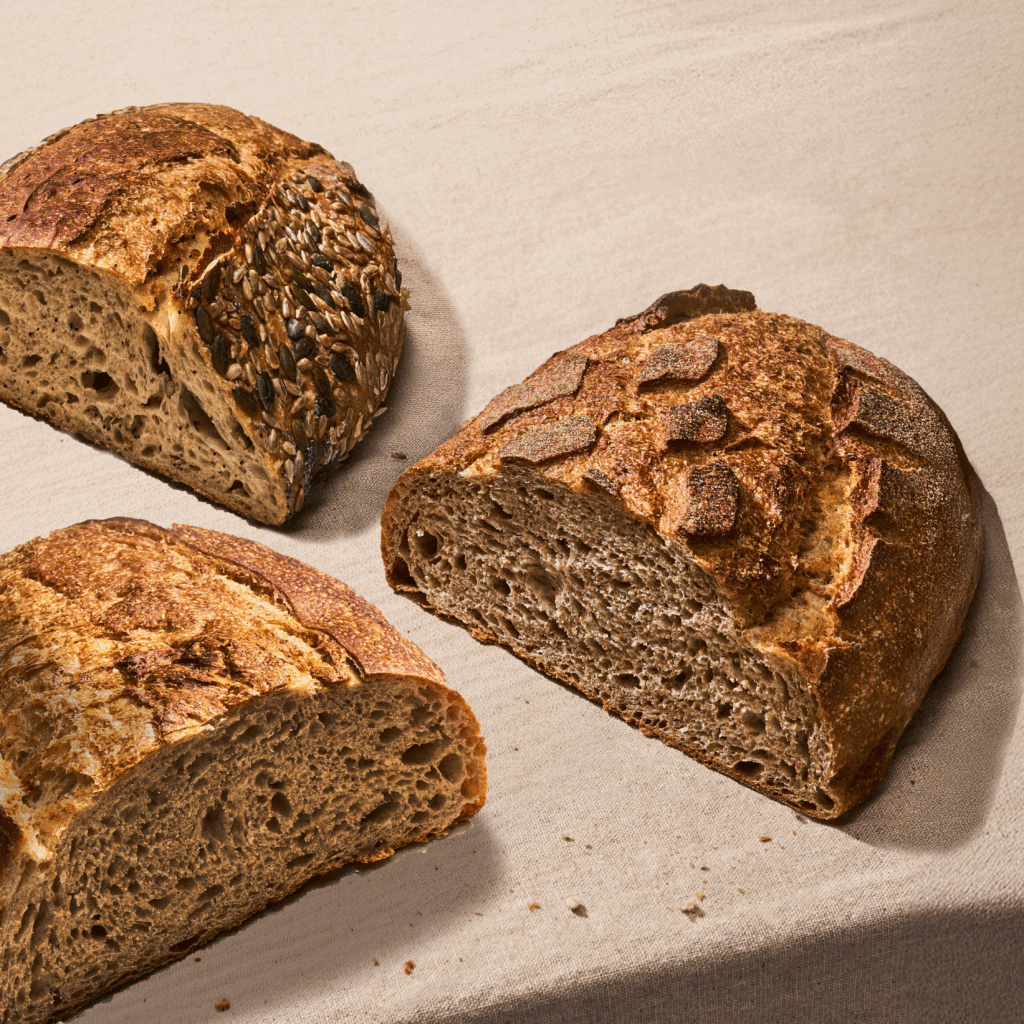
Plus, the denser texture of sourdough naturally slows digestion, helping you feel satisfied for longer. That longer‑lasting fullness can make it easier to manage portion sizes and avoid unnecessary snacking.
Fermentation: good for your gut (and digestion)
Sourdough is made through a slow fermentation process. While it doesn’t contain live probiotics like kefir or yoghurt, fermentation produces prebiotic compounds — substances that feed the healthy bacteria in your gut.
A healthy gut microbiome is linked with better digestion and efficient nutrient absorption, including fibre and protein. Some evidence also suggests that a balanced gut microbiome may play a role in appetite regulation and metabolic health, which can support long‑term weight management.
Evidence: Research published in Frontiers in Microbiology highlights that prebiotic compounds from fermented foods can positively influence gut microbiota composition and function, potentially benefiting overall digestive health.
More fibre and resistant starch, and better nutrient absorption
Compared with standard white bread, sourdough often contains slightly more fibre and resistant starch thanks to its fermentation process. The slow fermentation also reduces phytic acid, a compound that can bind minerals, meaning your body may absorb nutrients like protein, iron and magnesium more efficiently.
Fibre and resistant starch slow down digestion of carbohydrates and contribute to longer‑lasting satiety, helping you feel full for longer and reducing the likelihood of overeating later in the day.
Evidence: Multiple studies indicate that sourdough fermentation increases levels of resistant starch and enhances nutrient absorption, which is associated with improved satiety and a slower rise in blood glucose (Nutrients, 2019). We explore more about sourdough’s bioavailability in our blog comparing white sourdough to processed white bread.
The final crumb
Sourdough is not a magic bullet, but it’s a bread that:
- Helps keep blood sugar stable thanks to a lower GI
- Helps you feel fuller for longer because of its texture and higher fibre content
- Supports gut health through prebiotic benefits
- May improve nutrient absorption compared with unfermented bread
So rest assured, you can enjoy a slice of sourdough as part of a balanced diet without worrying about weight gain.
FAQs
Q: Is sourdough good for weight loss?
A: While no single food will cause weight loss, sourdough’s lower glycaemic index and higher fibre content can help you manage appetite and feel satisfied for longer.
Q: Does sourdough contain probiotics?
A: Traditional sourdough is not a probiotic like kefir or live yoghurts, but its fermentation produces prebiotics that feed beneficial gut bacteria.
Q: Can I eat sourdough if I’m trying to manage blood sugar?
A: Yes, its lower glycaemic index makes it a better choice than many white breads for maintaining stable blood sugar levels.
Q: Is sourdough higher in fibre than regular bread?
A: Generally, yes — traditional sourdough often has more fibre and resistant starch, contributing to longer‑lasting fullness and better digestion.


